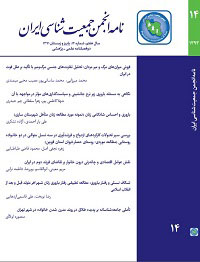
Journal of Population Association of Iran

Journal of Population Association of Iran

Journal of Population Association of Iran (JPAI) was established in 2006 by the Population Association of Iran in order to provide an active intellectual environment for national and international researchers focusing on population.

JPAI is one of the Iranian leading bi-quarterly scientific journals on issues related to population change and demographic trends. Acceptance of articles in this journal is based on anonymous peer-review of at least two blind scientific reviews and is published as open access journal.

About Journal:

ISO Abbreviation: JPAI

Journal Type: Scientific Journal

Scope: Population

Language: Persian with English Abstract

Average Time to First Decision: 6 Weeks 

Peer Review Policy: Double Blind Peer Review

Publication policy: Open Access Journal Support

Ranking in Portal of Scientific Journals: B

Citation Impact (CI) in ISC: 0.479

Article Processing Charges: 10000000 IRR

Online payment portal: https://idpay.ir/jpaiassoc

Deposit money: Account number 342054900, Tejarat Bank, in the name of the Population Association of Iran


“Journal of Population Association of Iran (JPAI) is following of Committee on Publication Ethics (COPE) and complies with the highest ethical standards in accordance with ethical laws”.

Journal of Population Association of Iran uses the Samimnoor system as similarity checker tool for the Persian articles and the iThenticate system for the Latin articles. 


Current Issue: Volume 20, Issue 40, March 2026, Pages 7-235 

Keywords Cloud

  • Iran
  • Fertility
  • Migration
  • Women
  • Tehran
  • education
  • Marriage
  • Ethnicity
  • Demographic Transition
  • Family
  • Childbearing
  • population
  • Divorce
  • causes of death
  • Internal Migration
  • Modernization
  • Gender
  • Age structure
  • religiosity
  • Population aging
  • Logistic regression
  • Mortality
  • Unemployment
  • Retirement
  • Causes of Migration
  • Quality of Life
  • economic growth
  • infertility
  • Population Policies
  • Elderly
  • life expectancy
  • employment
  • grounded theory
  • labor market
  • Attitude
  • Higher Education
  • Life expectancy at birth
  • development
  • Low fertility
  • Population age structure
  • Census
  • urbanization
  • Determinants
  • Proximate determinants
  • Immigration
  • Childlessness
  • qualitative study
  • International Migration
  • Total Fertility Rate
  • Life table
  • Shiraz
  • gender attitude
  • Early marriage
  • Ideal number of children
  • health
  • population growth
  • Child Marriage
  • Culture
  • Family planning
  • Reverse Migration
  • Cohort
  • Active population
  • Social Support
  • demographic changes
  • Age at Marriage
  • Childbearing behavior
  • Social Capital
  • Multivariate analysis
  • life satisfaction
  • Kurdistan
  • Employed women
  • Tehran city
  • household
  • Ageing
  • Mate Selection
  • Population change
  • induced abortion
  • Reproductive Health
  • Healthy lifestyle
  • standardization
  • Yazd
  • Unintentional accidents
  • Natural fertility
  • spatial patterns
  • TOPSIS
  • Cohabitation
  • epidemiological transition
  • Poisson Regression
  • demography
  • life insurance
  • Artificial insemination
  • SES
  • attitudes
  • lifestyle
  • Systematic review
  • Policy-making
  • Cultural Capital
  • Socio-economic status
  • economic factors
  • Contraception
  • Women\'s education
  • Literacy
  • Gender roles
  • Replacement fertility
  • First birth interval
  • mental health
  • fertility intention
  • Youth
  • Level of education
  • cardiovascular diseases
  • Head of Household
  • Parents
  • work-family conflict
  • Consanguineous Marriage
  • Household structure
  • abortion
  • Brain Drain
  • population simulation
  • Second Demographic Transition
  • Informal employment
  • Stigma
  • Lee-Carter Model
  • Marital status
  • Isfahan
  • parity progression
  • Married women
  • Risk
  • Adaptation
  • Multiple Classification Analysis
  • Qualitative Method
  • Survival analysis
  • Marriage Patterns
  • socioeconomic variables
  • Patriarchy
  • Unemployment Rate
  • Consequences
  • Poverty
  • Tabriz
  • demographic attitudes
  • Sex ratio
  • Demographic characteristics
  • child value
  • environment
  • Shiraz city
  • Postponement
  • Time Use
  • Rasht
  • Diseases
  • Coronavirus
  • widowhood
  • City of Rasht
  • Sex preference
  • Population Policy
  • Panel Data
  • Women’s Employment
  • Generational gap
  • Social stratification
  • Parity progression ratio
  • Social Security
  • Tendency to Migration
  • Participation Rate
  • sex
  • regional balance
  • Sardasht
  • Satisfaction
  • Iranian women
  • fertility decline
  • Sense of Social Security
  • Economic participation
  • Fertility Intentions
  • Gender Equity
  • Population size
  • Intention
  • Migrant
  • Event history analysis
  • Social Relations
  • Human Development Index
  • COVID-19
  • Cancers
  • Nationality
  • Adoption
  • Higher Education Graduates
  • Urmia
  • human capital
  • marital fertility
  • Socio-economic characteristics
  • growth rate
  • Employment status
  • Law of \"Rejuvenation of the Population and Support of the Family\"
  • Period
  • FERTILITY RATE
  • Cohort Analysis
  • age-period-cohort
  • age
  • Migration management
  • social factors
  • Below replacement fertility
  • Social space
  • Emmigration
  • Kantor Hierarchical Compensatory Theory